is blood sugar regulation positive or negative feedback Science isn't fiction: negative feedback and blood glucose regulation
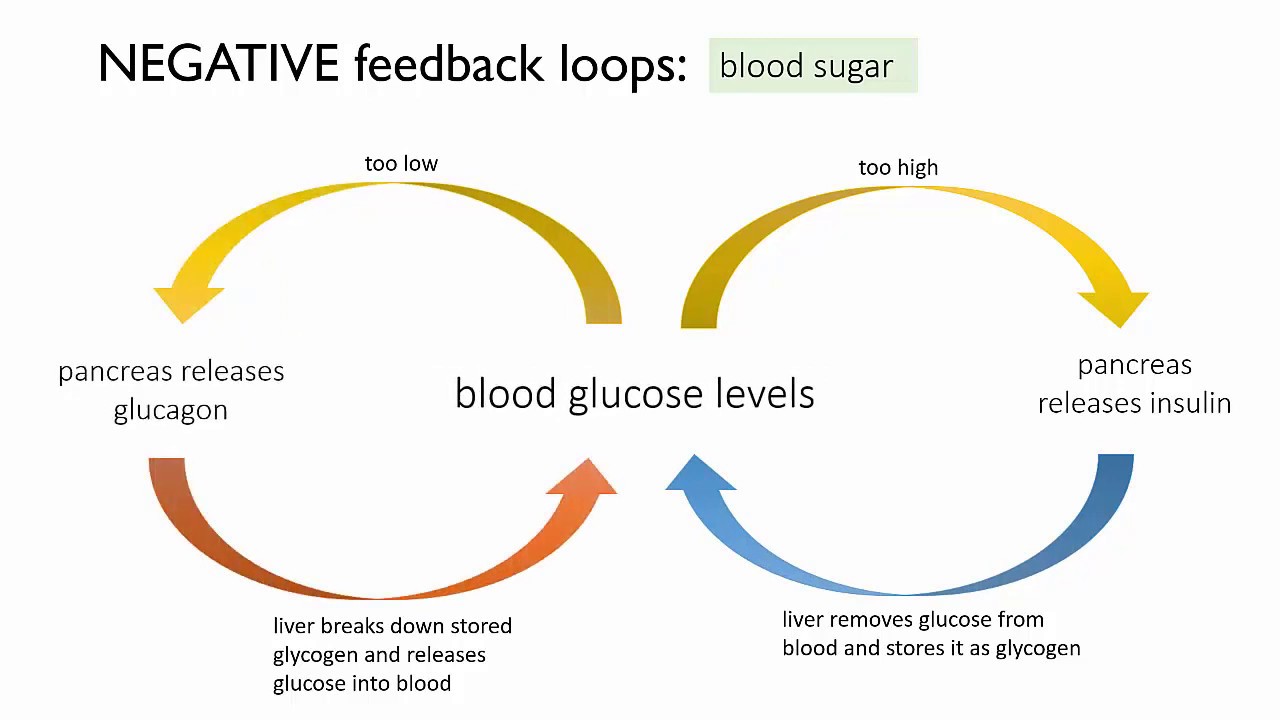
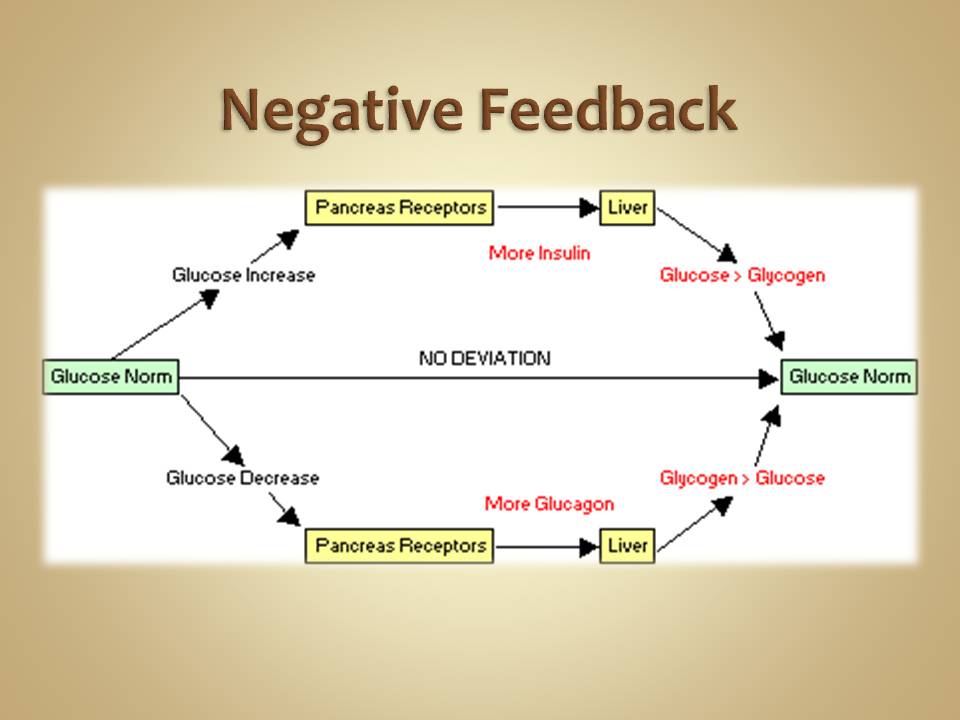
Have you ever wondered how your body maintains a constant level of sugar in your blood? The answer lies in an amazing feedback loop that controls blood glucose levels, keeping them in a narrow range that is optimal for your health. At the center of this loop is the pancreas, an organ that secretes two key hormones: insulin and glucagon. When your blood sugar levels rise after a meal, the pancreas releases insulin, which signals cells to absorb glucose from the bloodstream and convert it to energy or store it for later use. As glucose is cleared from the bloodstream, insulin production slows down and eventually stops. On the other hand, when your blood sugar levels drop, the pancreas releases glucagon, which signals the liver to break down stored glycogen into glucose and release it into the bloodstream. This raises blood sugar levels, and once they are restored to normal, glucagon production slows down. This feedback loop is controlled by complex interactions between your body’s cells, hormones, and nervous system. And it’s not just the pancreas that is involved: other organs and tissues such as the liver, muscles, and adipose tissue also play important roles in regulating blood sugar levels. But what happens when this feedback loop goes awry? In Type 1 diabetes, the pancreas is unable to produce insulin, while in Type 2 diabetes, insulin resistance or decreased insulin production leads to high blood sugar levels. This can cause a range of health problems, from fatigue and blurred vision to kidney damage and nerve damage. So what can you do to maintain healthy blood sugar levels? Eating a balanced diet, getting regular exercise, and maintaining a healthy weight are all important factors. And if you are at risk for diabetes or have already been diagnosed, monitoring your blood sugar levels and working with your healthcare provider to develop a treatment plan can help you manage the condition and prevent complications. As always, it’s important to listen to your body and seek medical attention if you notice any unusual symptoms or changes in your health. And remember, when it comes to blood sugar regulation, balance is key. So take care of yourself, and your body will thank you for it.
Image 1
 This diagram shows the complex feedback loop that regulates blood sugar levels in the body.
Image 2
 Watch this video to learn more about how the body maintains homeostasis of blood glucose levels.
If you are looking for Homeostasis of blood glucose (a negative feedback loop) - YouTube you’ve came to the right place. We have 5 Pictures about Homeostasis of blood glucose (a negative feedback loop) - YouTube like #113 The control of blood glucose | Biology Notes for A level, Science isn’t Fiction: Negative Feedback and Blood Glucose Regulation and also Homeostasis of blood glucose (a negative feedback loop) - YouTube. Here you go:
Homeostasis Of Blood Glucose (a Negative Feedback Loop) - YouTube
www.youtube.comfeedback negative loop glucose blood homeostasis
Pin En Biology
 www.pinterest.clpancreatic insulin glucagon hormones nursing endocrino veterinaria insulina endocrine biologia farmacologia humana glucagón
Science Isn’t Fiction: Negative Feedback And Blood Glucose Regulation
 scienceisntfiction.blogspot.myglucose blood feedback negative sugar regulation levels body does regulate science fiction isn decreased
[Solved] As A Medical Professional, How Would You Explain The Role
www.coursehero.comfeedback glucose loops negative glucagon biology blood homeostasis sugar positive explain loop insulin levels role pancreas high libretexts after between
#113 The Control Of Blood Glucose | Biology Notes For A Level
biology4alevel.blogspot.comblood glucose control summary homeostasis level cycle sugar liver concentration does low insulin fuel loop break feedback physiology regulate eating
Feedback negative loop glucose blood homeostasis. [solved] as a medical professional, how would you explain the role. Homeostasis of blood glucose (a negative feedback loop)